Collectors know the feeling. A coin forum or collector blog from 2012 goes quiet, the domain lapses, and suddenly the name is for sale. The seller says it once had strong links and a loyal audience. Perhaps that is true. Perhaps the domain was a link farm, or the old content was deleted and the links now point nowhere. If you follow the coin and collectibles market and want to buy such a name to host your own notes, the question is how to judge it before you pay.
This piece looks at Kiểm Tra Domain, a free Vietnamese language checker, as one input to that decision. It reads the metrics the tool reports, explains what each one can and cannot tell you, and walks through a due diligence routine for an aged domain. It does not recommend buying any particular name.
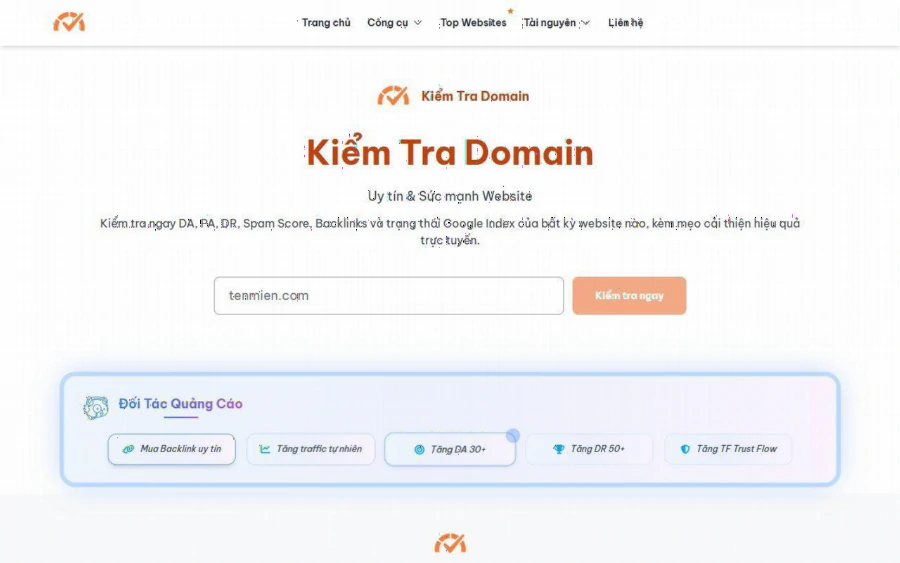
The Kiểm Tra Domain home page with a single input box for a domain name and a button to check metrics such as DA, PA, DR, Spam Score and Google Index
Why aged domains are tempting and risky
An old domain can carry backlinks that took years to earn. That is the appeal. The risk is that the history is invisible. A domain can have a high authority score because of links from spam networks. It can have been penalized. It can have changed topic several times. Buyers in niche hobby markets such as coin collecting feel this more, because the audience is small and a bad purchase is hard to recover from.
A metrics checker does not give you the history, but it gives you quick signals to rule out obviously weak or suspicious names before you spend time on deeper research.
What the tool reports
Based on the site's own pages, you type a full domain such as example.com into one box, pass a Cloudflare check, and press the check button. After a few seconds the tool returns a set of numbers. The main ones are:
- Domain Authority (DA) and Page Authority (PA) from Moz, both scored 1 to 100. The site says Moz builds DA from more than 40 signals.
- Domain Rating (DR) from Ahrefs, scored 0 to 100 and based on the quantity and quality of external backlinks.
- Spam Score, described on the page as the share of similar sites that Google has penalized or banned, with advice to keep it under 30 percent, and Moz Spam on a 0 to 17 scale.
- Organic Traffic, an estimate of monthly search visits from Ahrefs.
- Backlinks and Referring Domains from Ahrefs, and Links, Trust Flow and Citation Flow from Majestic.
- Topical Trust Flow and a long tail of other figures, including Moz Rank, Ahrefs Rank, organic keywords and several social counts.
The page lists its thresholds, for example that DA above 50 is strong for most industries and DR above 70 suggests a trustworthy site. These are the site's rules of thumb, not universal standards. A small collector niche may have excellent sites at far lower numbers.
A due diligence routine for a collector domain
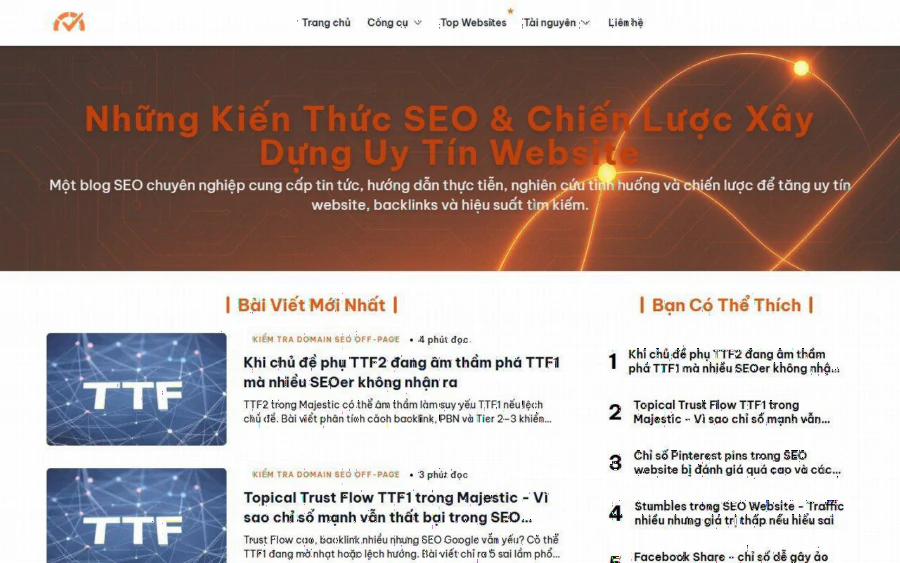
The Kiểm Tra Domain blog page listing articles about Topical Trust Flow, Pinterest pins, Stumbles and Facebook shares
Here is a sequence I would use, with the tool covering the first three steps.
1. Compare DA and DR. If DA is high but DR is very low, or the reverse, the link profile deserves a closer look, because the two companies crawl and score differently. This is a prompt for questions, not a verdict.
2. Read referring domains, not only backlinks. A thousand links from three sites is weaker than a hundred from sixty different sites. The tool shows both Ahrefs and Majestic counts so you can cross check.
3. Look at Trust Flow against Citation Flow. A large gap, with citation far above trust, often signals many low quality links. Topical Trust Flow also shows which subjects the links relate to. For a coin site you would hope to see hobby, collectibles or finance categories, not unrelated topics.
4. Check the Spam Score and Google Index status. The tool lists index status as part of its basic check. A domain that is not indexed at all deserves a pause.
5. Do the manual work. Open the Wayback Machine, read what the domain used to publish, and search for the brand name to see whether the old audience still exists. No metric replaces this.
What the blog adds
Besides the checker, the site runs a blog on off page SEO. The articles I saw explain Topical Trust Flow levels, why Pinterest pins, Stumbles, Facebook shares and Facebook comments are weak signals, and how topic mismatches can undermine Majestic scores. I did not find articles explaining DA, DR or Spam Score in detail, so for those you still need Moz and Ahrefs documentation. The blog is written in Vietnamese, which is helpful for readers in that market and a barrier for others.
Strengths and limits
The strengths are practical. One input returns metrics from Moz, Ahrefs and Majestic together, which saves opening three tools. The site has no visible price or sign up, so you can try it freely. It also offers separate pages per metric and a Top Websites list.
The limits matter as much. The interface and articles are in Vietnamese, so English readers will rely on translation. I could not find where the data comes from or how often it refreshes, so treat numbers as a snapshot. Third party scores are estimates and can be manipulated; a high DA never proves quality. The site also carries advertising for link and traffic services, and you should treat those as paid placements, not as advice.
Compared with the usual tools
Ahrefs offers a free Website Authority Checker, Moz offers Link Explorer, and Majestic has its own site explorer. Each is the original source for its own metrics, with more history and detail than a summary page. Their free tiers are limited, and they are in English. Kiểm Tra Domain's value is convenience: three vendors in one view and a Vietnamese interface. If you are making a serious purchase, confirm the key numbers at the original tool.
Who should use it, and who should skip it
It suits hobbyists, small site owners and anyone shortlisting several domains who wants a quick filter. It is less suited to professionals who need link by link analysis, historical graphs or large batch reports, and to anyone who cannot read the interface.
How to start
Open this free domain metrics checker, enter the domain you are considering, and note the DA, DR, spam and referring domain numbers in a spreadsheet. Repeat for three or four candidates so you can compare. Then read a few explanatory posts in the blog section to understand the trust metrics before you draw conclusions.
Conclusion
Buying an old collector domain is a bet on history you cannot see. A free checker will not remove the risk, but it can quickly separate weak candidates from ones worth investigating, and it shows enough different metrics to expose obvious mismatches. Use it as the first filter, confirm the important numbers at the original sources, and always read the domain's past with your own eyes before paying.